Skip to content

Best Studio Monitors for Music Production (2026)

A research-based roundup of studio monitors for home music production, matched to room size and budget — from a wide-sweet-spot 6.5" overall pick to a premium 5" near-field.

Published 6/13/2026 · Updated 6/15/2026 · research-based — we do not hands-on test products; every spec is sourced or flagged as unverified.

Our pickHome Studio Sweet Spot6 compatibility-checked partsSee the build ↓

Studio monitors are the one piece of gear that shapes every mix decision you make, which is exactly why they are so hard to buy. Unlike consumer speakers, they are supposed to be honest rather than flattering, so the "exciting" pair in the store demo is often the wrong choice. The bigger trap is room size: an 8" woofer in a small, untreated bedroom can overwhelm the space and make your low end impossible to judge, while a 5" pair in the right room can be more accurate than something twice the price.

This guide is research-based. We do not test or benchmark in a lab; we compare published specs, design choices, and how each model fits real home-studio use. See how we pick for the full approach.

What to look for

  • Woofer size vs. room size. As a rule, 5" monitors suit small/desk setups, 6.5" is the sweet spot for most bedrooms, and 8" only makes sense in a larger or treated room. Bigger is not better if the bass is uncontrolled.
  • Flat, reference-leaning response. You want monitors that reveal problems, not hide them. Hyped bass or scooped mids will fool you into mixes that fall apart on other systems.
  • Room-tuning controls. Acoustic-space switches, frequency contour, or onboard DSP let you compensate for desk reflections and corner placement — a real advantage in untreated rooms.
  • Dispersion and sweet spot. Waveguides and point-source (coaxial) designs widen the area where the stereo image holds together, which matters at a single mixing position.
  • Buy them in pairs. These are sold individually; budget for two so you have a true stereo reference.

Our picks

A monitor pair is only one part of the chain — your interface, room treatment, and headphones all factor in. When you are ready to round out the room, build a complete setup and see how these monitors slot into a full home studio.
What changed in 2026

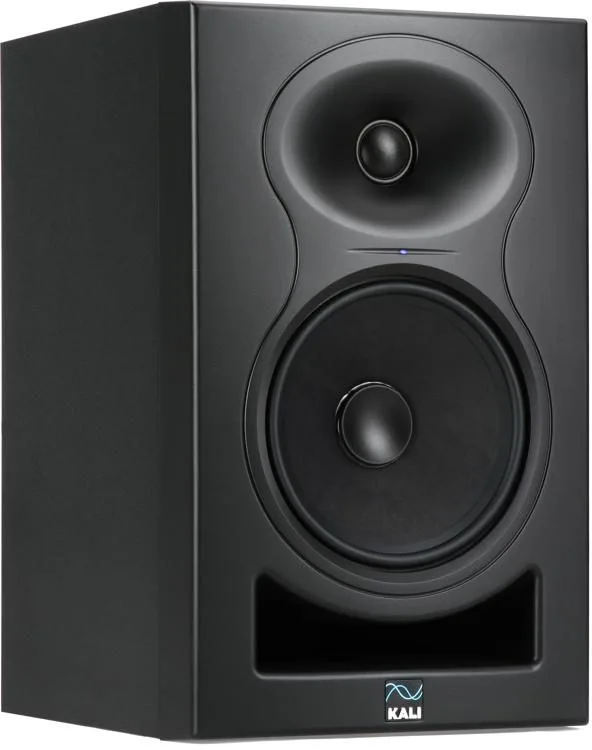
The bigger story this cycle is not a single new model but how much capable monitoring now lives under the $500-per-pair line, with affordable 6.5" pairs like the Kali Audio LP-6 V2 setting the bar for what a first serious pair should sound like. Onboard room-tuning DSP, once a premium feature, has trickled down to budget tiers, which matters more than ever as more producers work in untreated bedrooms. The honest takeaway: this is a great time to buy near the entry point, and a hard time to justify jumping straight to 8" monitors you cannot tame in a small room.

Mistakes beginners make

  • Buying 8" monitors for a small bedroom, where the extra low end becomes a liability you cannot judge instead of an asset.
  • Choosing the pair that sounded most "exciting" in a store demo, when hyped bass and scooped mids are exactly what you want a reference monitor to avoid.
  • Spending on monitors while skipping any room treatment, then blaming the speakers for problems the room is creating.
  • Placing monitors flat against a wall or deep in a corner and never touching the acoustic-space or contour switches that exist to fix it.
  • Mixing only on monitors and never cross-checking on a closed-back reference like the Audio-Technica ATH-M50x before calling a mix done.

How much to spend

Minimum viable

You can get genuinely usable, reference-leaning monitoring at the budget end. A 5" pair in a treated nearfield, or a value 6.5" pair, gets you flat-enough response to make real decisions without overspending before you know your room.

Sweet spot

Most home producers should land here, and a 6.5" pair like the Kali Audio LP-6 V2 is the archetype: enough low-end extension to trust, a wide sweet spot, and room-tuning controls for untreated spaces. This is where money buys real accuracy rather than bragging rights.

Buy once, cry once

Premium near-fields earn their price only when your room can support them and your ears can hear the difference. Pair that investment with treatment; otherwise a better room beats a better speaker every time.

How to choose: the decision that matters

Ignore the spec sheet drama and decide on two axes: woofer size versus room size (and treatment) on one, flatness versus flattery on the other. Plot yourself honestly:

  • Small/untreated room + flat monitor: the safe default — go 5" or 6.5" and lean on room-tuning controls.
  • Large/treated room + flat monitor: the ideal — you have earned the right to bigger, honest monitors.
  • Small room + hyped monitor: the trap — exciting in the store, ruinous for mixes that travel.
  • Large room + hyped monitor: wasted potential — a good space deceived by flattering speakers.

How we researched this

Every pick here is drawn from our sourced product catalog, where each spec is either sourced or flagged, and our recommendations come from comparing published specs and design choices rather than hands-on lab testing. See our methodology for the full approach, and check the field-level sources on each product page before you buy.

The recommended setup

Home Studio Sweet Spot

Product links on this site may be affiliate links — same price for you, and picks are never influenced by commissions.

Frequently asked

What does this best studio monitors for music production (2026) guide cover?
A research-based roundup of studio monitors for home music production, matched to room size and budget — from a wide-sweet-spot 6.5" overall pick to a premium 5" near-field.
What's in the recommended Home Studio Sweet Spot setup?
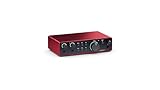
Home Studio Sweet Spot pairs 6 compatibility-checked parts — Audio Interfaces: Focusrite Scarlett 2i2 (4th Gen); Studio Monitors: Kali Audio LP-6 V2 (pair); Headphones: Audio-Technica ATH-M50x; Microphones: RØDE NT1 (5th Generation); Keyboard Controllers: Novation Launchkey 49 MK4; DAWs: Ableton Live 12 Standard.
Does Setup Gear Guide hands-on test these products?
No — this guide is research-based. We do not hands-on test products; every spec is sourced or flagged as unverified, and product links may be affiliate links that never change our picks.
All Music Production guides →