Pedals decide your lap time more than almost any other part of a sim rig, yet they are the part most people under-budget. The stock pedals bundled with a wheel usually rely on a simple potentiometer for braking, so you press by distance instead of by force — the opposite of how you brake in a real car. Stepping up to a proper load-cell or hydraulic brake is the single biggest consistency upgrade most drivers can make, and the gap between an entry set and a flagship set is real but not linear.
What to look for
The brake is everything. A load-cell pedal measures the force you apply rather than how far the pedal moves, which lets you build muscle memory for a repeatable threshold-braking point. Hydraulic brakes go a step further, using fluid resistance to mimic the progressive firmness of a real master cylinder. Either is a massive step up from a potentiometer.
A few other things separate good pedal sets from great ones:
- Brake stiffness range — the heaviest sets target real-car forces (often quoted at 100 kg or more), but what matters is having enough range and adjustable elastomer or spring stacks to dial in a feel you can repeat lap after lap.
- Throttle and clutch sensors — hall-effect or contactless sensors avoid the wear and drift of cheap potentiometers, so calibration stays stable over time.
- Build and mounting — heavier pedals need solid bolt-down mounting to a rig or hard floor; flexy plastic bases ruin an otherwise good brake.
- Ecosystem fit — some pedals plug directly into a specific wheelbase, while others connect over USB and work with anything. Match this to the gear you already own.
You can read more about our research-based approach in how we pick. We do not bench-test these ourselves; rankings draw on manufacturer specs, owner feedback, and ecosystem fit.
Our picks
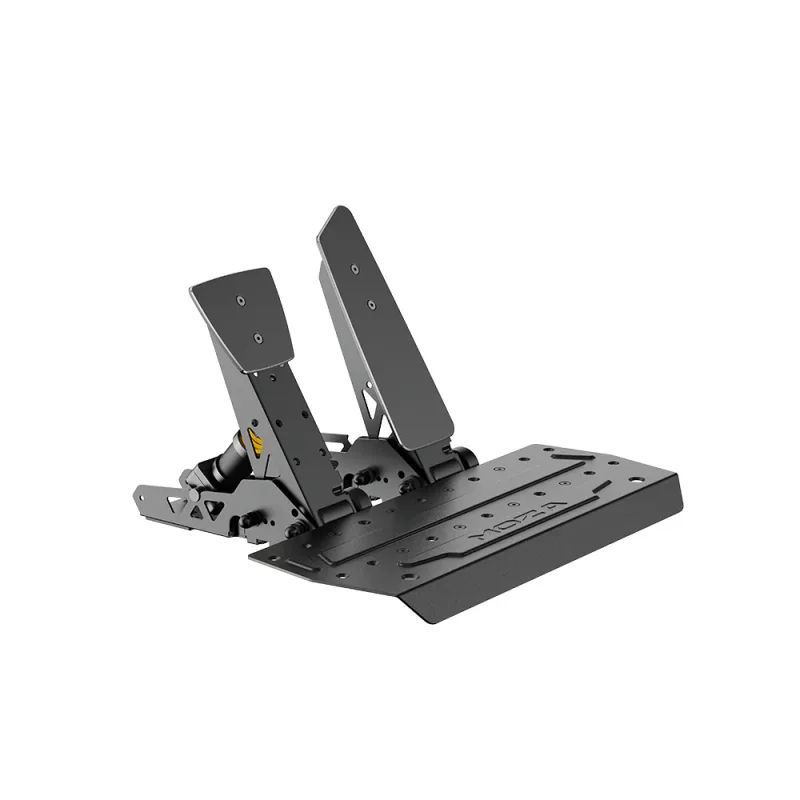
- Best overall — MOZA CRP2 Pedals deliver a 200 kg load-cell brake at a genuinely mid-tier price, making premium braking feel accessible. Mid-tier.
- Best budget — Logitech RS Pedals bring adjustable pedal positions and a hall-effect throttle to entry-level rigs, especially RS50 owners. Budget-tier.
- Best for Fanatec rigs — Fanatec ClubSport Pedals V3 Inverted use a top-hinged, real-car-style layout with longer travel for drivers already in the Fanatec ecosystem.
- Best premium — Asetek Invicta Pedals (T.H.O.R.P.) center on Asetek's hydraulic T.H.O.R.P. brake cylinder, the flagship-feel option for no-compromise builds.
- Best value hydraulic — Conspit CPP-EVO Hydraulic Pedals pair dual-stage hydraulic braking with a roughly 200 kg sensor at well below typical flagship hydraulic pricing.
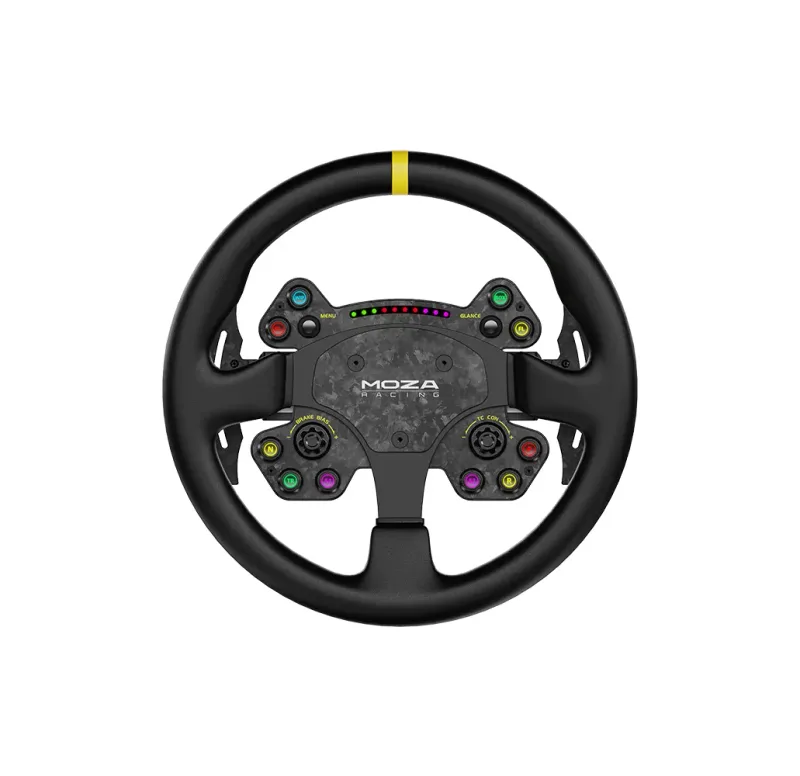
Pedals are only one piece of the puzzle. Once you have a brake you trust, build a complete setup so your wheelbase, wheel, and rig all match the way you drive.
What changed in 2026
Load-cell braking has moved from a premium feature to the expected baseline at the mid-tier, so a potentiometer brake on anything but the cheapest bundled set is now hard to justify. Pricing on entry load-cell kits has settled rather than dropped, while the meaningful spread is still between a good load cell and a true hydraulic brake. The honest read: most drivers will see their biggest consistency gain from a competent load-cell set like the MOZA SR-P Load Cell Pedals, not from chasing the heaviest flagship.
Mistakes beginners make
- Spending the whole budget on the wheel and base, then keeping the potentiometer pedals that came in the box.
- Buying the stiffest possible brake spring and then never being able to modulate it under threshold braking.
- Skipping a solid bolt-down mount, so a heavy pedal set slides on the floor and the brake feel changes every session.
- Obsessing over throttle and clutch sensors when the brake is the pedal that actually decides lap consistency.
- Treating load cell rating in kilograms as a quality score rather than a range you tune elastomers within.
How much to spend
Minimum viable
Get off potentiometers first. The cheapest legitimate load-cell set you can mount firmly beats any expensive wheel paired with bundled pedals, because force-based braking is the upgrade your muscle memory actually rewards.
Sweet spot
This is where most drivers should land: a tunable three-pedal load-cell set such as the MOZA SR-P Load Cell Pedals, with enough elastomer stack range and hall-effect throttle to stay repeatable for years.
Buy once, cry once
A hydraulic brake with real master-cylinder progression is the endgame. Only worth it once your mounting is rock-solid and you are chasing tenths, not learning to brake.
How to choose: the decision that matters
The two axes that drive a pedal purchase are brake feel type (potentiometer vs load cell vs hydraulic) and mounting rigidity (floor mat vs hard bolt-down). Call it the Brake-and-Bolt matrix:
- Soft brake, loose mount: the stock-bundle trap — inconsistent and the part to replace first.
- Soft brake, rigid mount: stable but you are still braking by distance; you have built a good foundation for the wrong sensor.
- Firm brake, loose mount: good hardware undermined by a sliding base, so feel drifts session to session.
- Firm brake, rigid mount: the target — force-based braking on a solid platform, where practice actually compounds.
How we researched this
Every pick here is drawn from our sourced product catalog, where each spec is either cited or flagged when a manufacturer figure could not be confirmed. See our methodology for how we score and rank, and check the field-level sources on each product page — this is research-based selection, not hands-on lab testing.