Focusrite Scarlett 16i16 (4th Gen) vs PreSonus Quantum HD 2: which to buy
These two land in nearly the same place on the spec sheet, which is exactly why the choice is harder than it looks: both are 2024-era, USB-C, "pro"-tier rackmount-class interfaces with two mic preamps and a big stack of digital I/O for ADAT expansion. The real decision comes down to one feature gap and one ecosystem question. The PreSonus Quantum HD 2 captures in 32-bit float and leans on PreSonus's MAX-HD preamps; the Focusrite Scarlett 16i16 (4th Gen) is the safer, more universally-supported workhorse that typically sits a tier above on price. Pick based on whether 32-bit-float headroom and the Studio One workflow matter to you, or whether you just want the most boringly reliable big-I/O Scarlett.
Pick the PreSonus Quantum HD 2 if you record unpredictable, loud, transient-heavy sources and you want to stop riding gain. Its headline advantage is 32-bit-float recording at up to 192kHz: in practice that means you can set a conservative level and effectively not clip, because you recover the dynamic range in the box afterward. On paper it's also the wider box for outputs, listed as a 20x24 configuration with 24 outputs total (four TRS line outs, a dedicated re-amp pair, headphones, plus the ADAT/S/PDIF channels) versus the Scarlett's 16. If you're a Studio One user, the integration and the bundled software make it the natural home-team pick, and it typically undercuts the Focusrite on price for a comparable 2-preamp, ADAT-expandable feature set.
Pick the Focusrite Scarlett 16i16 (4th Gen) if your priority is rock-solid drivers, broad DAW compatibility, and resale-grade ubiquity. The 4th-gen Scarlett line is about as widely supported and troubleshot as audio interfaces get, with full Windows and macOS support and Focusrite Control 2 for routing. It carries the same 2 mic preamps and ADAT-based expansion path as the PreSonus, plus loopback for streaming and podcasting. If you're building a hybrid rig where most of what you need is line returns — outboard gear, synths, a summing setup — its 16-in / 16-out layout with ADAT and S/PDIF is purpose-built for that, and the Focusrite name tends to hold value if you ever resell.
The trap to avoid: buying either of these to track a lot of microphones at once. This is the single most common mismatch, and both seed listings flag it directly. Each unit ships with only two onboard mic preamps. The 16 or 24 figure is total I/O, the bulk of which is digital (ADAT/S/PDIF) and line-level — not extra preamps. To actually record, say, a drum kit or a small band live, you need an external 8-channel preamp connected over ADAT (something like an OctoPre-class unit), which is an additional purchase. If you know up front you need four or eight onboard preamps, the honest move is to step up in the Focusrite line to the 18i16 (four 4th-gen preamps) or 18i20 rather than forcing one of these two-preamp boxes to do a job it wasn't designed for.
So how to choose. If you're tracking dynamic, hard-to-gain sources — drums via outboard, loud vocalists, location-style capture — and especially if you already live in Studio One, the Quantum HD 2's 32-bit-float capture and lower typical price make it the smarter buy. If you value maximum driver maturity, the broadest plugin/DAW compatibility, and a name that resells easily — or you simply want the canonical big-I/O Scarlett for a line-heavy hybrid studio — the Scarlett 16i16 is the safe default even at its slightly higher tier. For most people the deciding factor is genuinely the 32-bit float: if that headroom solves a real recording headache for you, take the PreSonus; if it doesn't, the Focusrite's ubiquity wins.
Spec comparison (generated live)
| Spec | 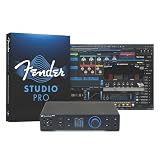 PreSonus Quantum HD 2 PreSonus Quantum HD 2PreSonus | 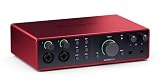 Focusrite Scarlett 16i16 (4th Gen) Focusrite Scarlett 16i16 (4th Gen)Focusrite |
|---|---|---|
| Price (tracked / list) | $350 | $400 |
| Overall scoreeffectively tied (within ±3pt band) | 80±3 | 79±3 |
| Tier | pro | pro |
| connection | USB-C | USB-C |
| mic inputs | 2 | 2 |
| outputs | 24 | 16 |
| phantom power | yes | yes |
| loopback | yes | yes |
| Where to buy | Check price | Check price |
Some links may be affiliate links — same price for you; our comparisons are never influenced by commissions.