Trak Racer TR160 V5 vs TR120S V2: which to buy
Both of these are Trak Racer's aluminum-profile rigs aimed squarely at high-torque direct drive, and on paper they're rated for the same wheelbase ceiling — Trak Racer lists both at 0 to 30 Nm+. So the real decision isn't "how much torque can I run." It's how much extrusion rigidity you want to pay for, and whether you're chasing a sensible high-end build or the literal stiffest frame in the lineup.
The core trade-off is profile size and price. The TR120S V2 is built around 120x40 mm aluminum profiles and is the lower-priced of the two. The TR160 V5 steps up to a double-walled 160 mm extrusion — Trak Racer markets it as their most rigid rig — and the cost steps up meaningfully with it, on the order of roughly half again as much by the time you're comparing like-for-like frames. Same stated torque rating, meaningfully different chassis, meaningfully different cost.
Pick the TR120S V2 if you're building a strong direct-drive rig and want the money to go further down the chain — into the wheelbase, pedals, and a quality seat — rather than into chassis overkill. The 120x40 profile is already a genuine high-torque frame; Trak Racer rates it for 30 Nm+, which covers essentially every consumer direct-drive base on the market today, including the strongest 12–20 Nm units most people actually buy — think a Moza R12, a Fanatec ClubSport DD, or a Simagic Alpha. For the overwhelming majority of sim racers, this is the rig that does the job and leaves budget for the parts that change how the car feels. It's the high-torque pick that doesn't tip into diminishing returns.
Pick the TR160 V5 if rigidity is the spec you're optimizing for and you want the stiffest foundation Trak Racer offers. The double-walled 160 mm extrusion is the reason this rig exists: the thicker, hollow-double-wall profile resists torsional flex far better than a single-wall section when a powerful base tries to twist the frame under hard, sustained load-cell braking. If you run a top-tier base near the upper end of consumer torque — a Simucube 2 Pro, a Moza R21, an Asetek Invicta — do a lot of heavy trail-braking on a stiff load cell, and are simply intolerant of any frame flex you can detect, the larger profile is what you're buying. It's also the rig to choose if you're building once and never touching it again, and you'd rather over-build the foundation than wonder about it later.
The trap to avoid: buying the TR160 V5 purely because the number is bigger, when your wheelbase tops out well below the rating both rigs share. Remember the published torque ceiling is identical — 30 Nm+ on both — so the upgrade money is buying chassis stiffness, not headroom for a stronger base. If you're running an 8–15 Nm class wheelbase — a Moza R9, a Fanatec CSL DD, a Logitech RS — the TR120S V2's 120 mm profile is already past the point where flex is the limiting factor in your lap times; the extra spend on 160 mm extrusion is insurance you may never cash. Spend it on pedals or a wheel instead. The other practical trap is availability: the TR160 V5 has been prone to going out of stock, so confirm it's actually purchasable before you set your heart on it — the TR120S V2 is the safer bet if you want to build now.
One caveat that applies to both: neither rig ships with a seat, and both support front and bottom wheel mounting, so factor a seat into your total cost regardless of which frame you pick. A decent racing or reclining bucket seat can easily run a third again on top of the frame price, so the sticker is the skeleton, not the finished cockpit — budget for the whole rig, not just the rails.
Bottom line: the TR120S V2 is the smart-money choice and the one most buyers should default to — a true 30 Nm+ rated frame at a clearly lower price, with the slack going toward parts that actually change the driving experience. The TR160 V5 is for the buyer who wants the stiffest possible foundation and is willing to pay the premium for the double-walled 160 mm profile, accepting that the torque ceiling is the same on paper. If rigidity is your hobby, go TR160 V5; if lap times and value are, the TR120S V2 wins.
Spec comparison (generated live)
| Spec | 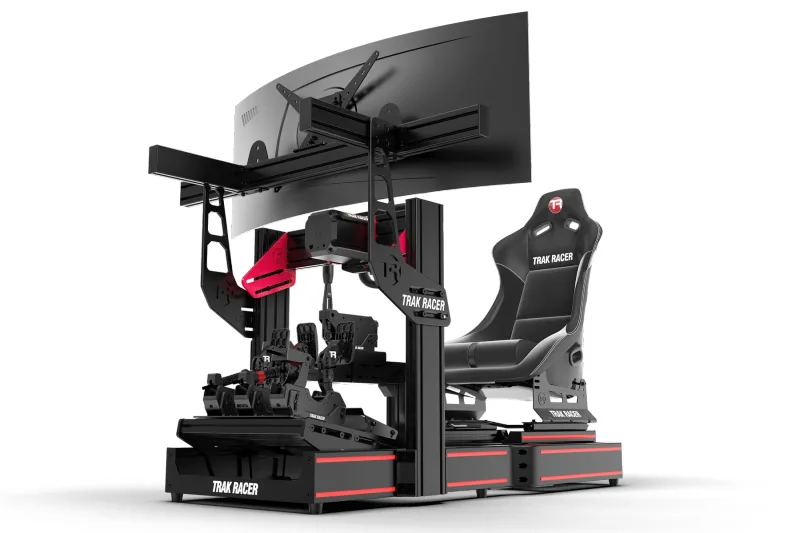 Trak Racer TR120S V2 Trak Racer TR120S V2Trak Racer | 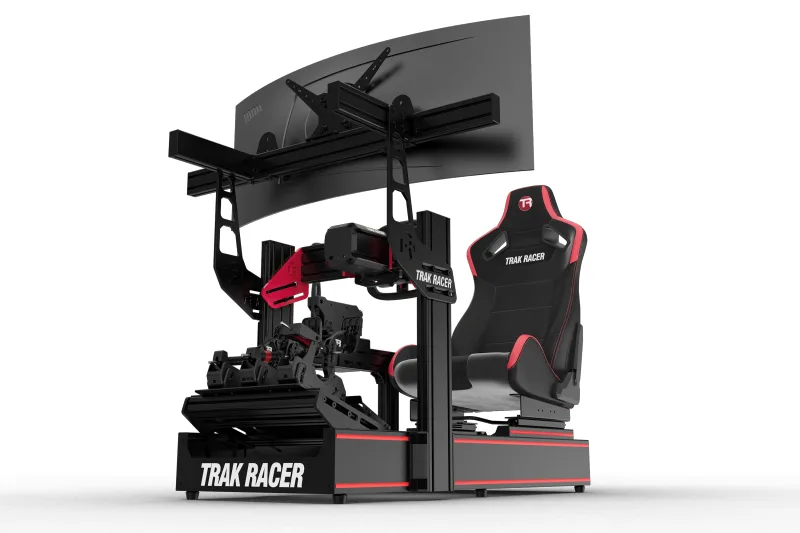 Trak Racer TR160 V5 Trak Racer TR160 V5Trak Racer |
|---|---|---|
| Price (tracked / list) | $570 list | $730 |
| Overall scoreeffectively tied (within ±3pt band) | 78±3 | 81±3 |
| Tier | pro | no compromise |
| frame type | Aluminum Profile 120 | Aluminum Profile 160 |
| max wheelbase torque (Nm) | 30 | 30 |
| seat included | no | no |
| front or bottom mount | both | both |
| Where to buy | Check price | Check price |
Some links may be affiliate links — same price for you; our comparisons are never influenced by commissions.