RØDE Lavalier II vs Sennheiser MKE 600: which to buy
These two mics show up in the same search, but they almost never belong on the same shoot. The Sennheiser MKE 600 is a pro-tier XLR shotgun built to capture a subject from a boom or a camera-top mount across the room; the RØDE Lavalier II is an enthusiast-tier wired lav built to clip onto the subject and disappear. The real question isn't which mic is "better" — it's whether your shoot wants the mic near the camera or near the mouth.
Pick the Sennheiser MKE 600 if you shoot interviews, run-and-gun docs, short films, or anything where you control the room and want one mic to cover dialogue. By the spec sheet it's an XLR shotgun, and the part that matters most for solo shooters is its power flexibility: it runs on standard 48V phantom or a single AA battery. That AA option is the whole reason it survives outside a studio — you can boom it off a DSLR/mirrorless body through an XLR handle (a Tascam/Zoom-style adapter or a Sennheiser interface) without dragging a recorder that supplies phantom. It sits a clear tier above the on-camera shotguns in this catalog and is the natural step up if you've outgrown a VideoMic-class mic and want broadcast-leaning reach.
Pick the RØDE Lavalier II if your subject moves, your environment is noisy or reverberant, or you simply can't get a boom close enough. A lav clipped to a collar sits inches from the mouth, so it rejects room echo and crowd noise far better than any shotgun parked three feet away — that proximity is the entire point. The catch worth understanding up front: this is only the capsule. It terminates in a locking 3.5mm connector designed to plug into a transmitter, and per RØDE it's purpose-built for the Wireless GO / Wireless PRO bodypacks. On its own it does not connect to a camera, a phone, or an XLR bodypack without the right adapter (an SC4 for a TRS jack, an AI-Micro for phones). Budget for that — and ideally a wireless kit — before you assume the lav's sticker price gets you a working signal chain.
The trap to avoid: treating the price gap as the deciding factor. The Lavalier II typically undercuts the MKE 600 by a wide margin, but that headline number is misleading because the lav isn't a complete solution — add a Wireless GO-class transmitter/receiver and the realistic lav rig often costs more than the shotgun, not less. Conversely, don't buy the MKE 600 expecting it to fix bad audio on a camera that has no XLR input; without an XLR handle or interface it has nowhere to plug in, and that adapter is a mandatory purchase, not an accessory. Match the mic to the signal chain you actually own.
Two more scenario calls. If you shoot mostly seated, single-subject talking-head or interview content in a space you can quiet down, the MKE 600 on a stand or boom is the cleaner, lower-hassle path and the one that scales into a real cinema kit. If you shoot weddings, events, walk-and-talks, or any situation where the talent roams and the room is loud, the Lavalier II (on wireless) is the only one of the two that will reliably bring home usable dialogue.
Bottom line: this is a shotgun-versus-lav decision, not a cheap-versus-expensive one. Buy the Sennheiser MKE 600 if you want one versatile, battery-or-phantom dialogue mic for controlled, camera-distance shoots and a clear upgrade path. Buy the RØDE Lavalier II if your work demands the mic on the subject — just go in knowing it's the capsule end of a wireless system, and price the whole chain, not the lav alone.
Spec comparison (generated live)
| Spec | 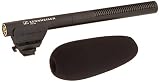 Sennheiser MKE 600 Sennheiser MKE 600Sennheiser | 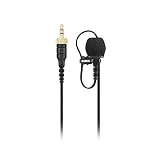 RØDE Lavalier II RØDE Lavalier IIRØDE |
|---|---|---|
| Price (tracked / list) | $225 | $102 / $99 list |
| Overall score | 80±3 | 73±3 |
| Tier | pro | enthusiast |
| mic type | shotgun | lavalier |
| connection | XLR | 3.5mm TRS |
| phantom power required | no | no |
| Where to buy | Check price | Check price |
Some links may be affiliate links — same price for you; our comparisons are never influenced by commissions.