Sony FX30 vs Panasonic LUMIX GH7: which to buy
Both of these are video-first "cinema" bodies aimed at the same working pro, but they answer the central question — how much do you care about the lens ecosystem versus the in-camera toolset? — in opposite directions. The Sony FX30 is the cheaper, lighter Super 35 (APS-C) body that plugs straight into the deepest hybrid lens and autofocus ecosystem on the market. The Panasonic LUMIX GH7 is the heavier, pricier Micro Four Thirds workhorse that buries an absurd codec and recording toolset inside the body itself.
Pick the Sony FX30 if autofocus and the lens catalog are what actually decide your shoots. It sits a tier below the GH7 on price by the spec sheet, weighs notably less (646g vs 805g), and rides the Sony E-mount — the largest third-party lens ecosystem going, with Sigma, Tamron and Sony's own glass at every price point. Its Super 35 / APS-C sensor is physically larger than the GH7's Four Thirds chip, so you get a shallower-depth-of-field look and a cleaner high-ISO image with less effort. It's a true Cinema Line body too: built-in active cooling fan, timecode, and a removable top handle with XLR inputs, plus dual slots that each take CFexpress Type A or SD UHS-II. If you're a solo shooter, run-and-gun documentary, or anyone who lives and dies by reliable face/eye AF, the FX30 is the safer everyday tool.
Pick the Panasonic LUMIX GH7 if you're a deliberate, controlled-set shooter who wants the recording toolset to live in the body, not in an external recorder. This is the standout: internal Apple ProRes, open-gate recording off the full 25.2MP BSI sensor for reframing and vertical deliverables, and a famously deep codec/log menu — the kind of feature density Sony reserves for pricier cinema bodies. It's built to record for long, uninterrupted sessions, which makes it a natural fit for interviews, events and livestreams. The Micro Four Thirds mount means the lenses are smaller, lighter and cheaper for a given reach, which matters enormously if you're building a gimbal or travel kit. The trade-offs are real: it's the heaviest body here, and the small sensor gives you less natural background separation and less low-light latitude than the Sony.
The trap to avoid: buying either body on its sensor size alone and forgetting that you are marrying a lens mount for years. The FX30's Super 35 sensor is the headline, but the lasting value is the E-mount glass you'll accumulate — if you already own Sony lenses, this decision is essentially made. Conversely, the GH7's Four Thirds sensor scares people off on paper, but its real pitch is the system: tiny, affordable MFT lenses plus internal ProRes that can replace an entire external-recorder rig. Don't pay the GH7 premium for the codec toolset and then never touch ProRes or open-gate — at that point the cheaper, lighter Sony does your job better. And don't buy the FX30 for "the cinema look" if your actual deliverables are talking-head interviews where the GH7's record-everything internals would have saved you a recorder, a battery and a cable.
On workflow specifics, both use a fast card in slot one — CFexpress Type A on the Sony, the more common and cheaper CFexpress Type B on the Panasonic — backed by an SD UHS-II slot, so neither will bottleneck you, but the GH7's Type B media is generally easier and cheaper to source. Both have in-body stabilization. The FX30 is the more grab-and-go body; the GH7 is the more self-contained studio in a box.
Bottom line: if you want the strongest autofocus, the widest lens selection, a larger sensor and a lighter, cheaper body, the Sony FX30 is the default pick for most hybrid and run-and-gun shooters. If your work is planned, codec-heavy, long-recording video where internal ProRes, open-gate and a compact MFT lens kit genuinely change your day, the Panasonic LUMIX GH7 earns its premium. Choose the ecosystem you want to live in first, and let the body follow.
Spec comparison (generated live)
| Spec |  Sony FX30 Sony FX30Sony | 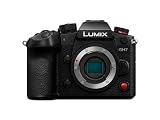 Panasonic LUMIX GH7 Panasonic LUMIX GH7Panasonic |
|---|---|---|
| Price (tracked / list) | $950 / $1,800 list | $1,998 / $2,200 list |
| Overall scoreeffectively tied (within ±3pt band) | 77±3 | 77±3 |
| Tier | pro | pro |
| lens mount | Sony E | mft |
| sensor format | APS-C | Micro Four Thirds |
| megapixels | 20.1 | 25.2 |
| IBIS | yes | yes |
| body style | cinema | cinema |
| card slot types | Cfexpress A, Sd Uhs Ii | Cfexpress B, Sd Uhs Ii |
| weight (g) | 646 | 805 |
| Where to buy | Check price | Check price |
Some links may be affiliate links — same price for you; our comparisons are never influenced by commissions.