Nanlite Forza 60B II vs PavoTube II 30X: which to buy
Both of these wear the Nanlite badge, so this was never a brand fight — it's a question of what kind of light you actually need, and the two answer opposite questions. The PavoTube II 30X is a 4-foot RGBWW pixel tube built to be seen and shaped: full-color effects, in-frame practicals, neon looks, and a soft wraparound edge you can place right in the shot. The Forza 60B II is a bi-color point-source spotlight meant to be hidden behind a modifier and pushed through a softbox, dome, or reflector to throw controlled, directional output. One is a creative color instrument; the other is a workhorse key light. On paper they barely overlap.
Price and tier reinforce that split rather than blur it. The PavoTube II 30X sits in the pro tier at about $540 — that buys full RGB pixel control, a tunable 2700K-12000K range, and the cable-free convenience of an internal battery in a 4-foot wand. The Forza 60B II lands in the enthusiast tier at roughly $320, a more straightforward 2700-6500K bi-color tool with a high CRI 96 rating and 72W of rated power feeding a single focused emitter. The cheaper light is not a worse light; it is a different light that does its one job harder. (Check the live price table for current numbers.)
Pick the Nanlite PavoTube II 30X if color is the point. If your work leans on RGB accents, gel-without-gels looks, practicals you can see in frame, or a long soft source you place just outside the edge of the shot, the tube shape and per-pixel control are exactly what you're paying for. Music videos, moody interviews, product tables that need a colored kicker, cramped sets where a battery-powered wand can hide behind a laptop or a plant — this is its territory. A spotlight simply cannot do any of that without a bag of gels and a lot of compromise, and even then it won't give you a 4-foot soft strip of light.
Pick the Nanlite Forza 60B II if you mainly need a strong, focused source you'll shape with a modifier. As a Bowens-compatible point source (it ships with a Bowens adapter over the native Forza mount), it takes softboxes, domes, grids, and reflectors the way a tube never will — that's the entire reason a COB-style spotlight exists. For talking-head, interview, and product work where directional control, punch, and clean color rendering (CRI 96) matter more than chromatic effects, this is the more practical and more affordable choice. It also runs off NP-F batteries for run-and-gun two-point setups, so "field-ready" isn't exclusive to the tube.
A useful way to decide: think about where the light lives in your frame. If the light is supposed to be invisible — a key or fill doing its job from behind a softbox, off to the side, out of shot — you want the Forza, because its whole value is in what you bolt onto the front of it. If the light is supposed to be part of the picture — a colored streak across the background, a practical glowing on a desk, an edge you actually see — you want the PavoTube, because being seen and being colorful is the product.
The trap to avoid: buying the cheaper Forza to save the roughly $220, then spending months wishing you had color you can't fake with a bi-color head — or, just as common, buying the PavoTube as your main key and discovering a 36W RGBWW tube spread across four feet doesn't punch through a softbox the way a focused 72W spotlight does. The PavoTube is built for soft, broad, colorful output, not for hard, modifiable throw; the Forza is built for hard, modifiable throw, not for in-frame color. Don't cross-shop them on price.
Bottom line: these aren't two grades of the same light, they're two tools for two jobs, so match the fixture to the look rather than the number on the tag. If your shooting is mostly clean, directional key-and-fill that you modify — interviews, talking heads, product — the Forza 60B II is the smarter, cheaper buy and probably all you need. If color and in-shot presence are central to what you make, the PavoTube II 30X earns its pro-tier price and the Forza will only frustrate you. Most ambitious kits eventually own one of each; if you can only start with one, let the look you shoot most often, not the price, cast the deciding vote.
Spec comparison (generated live)
| Spec | 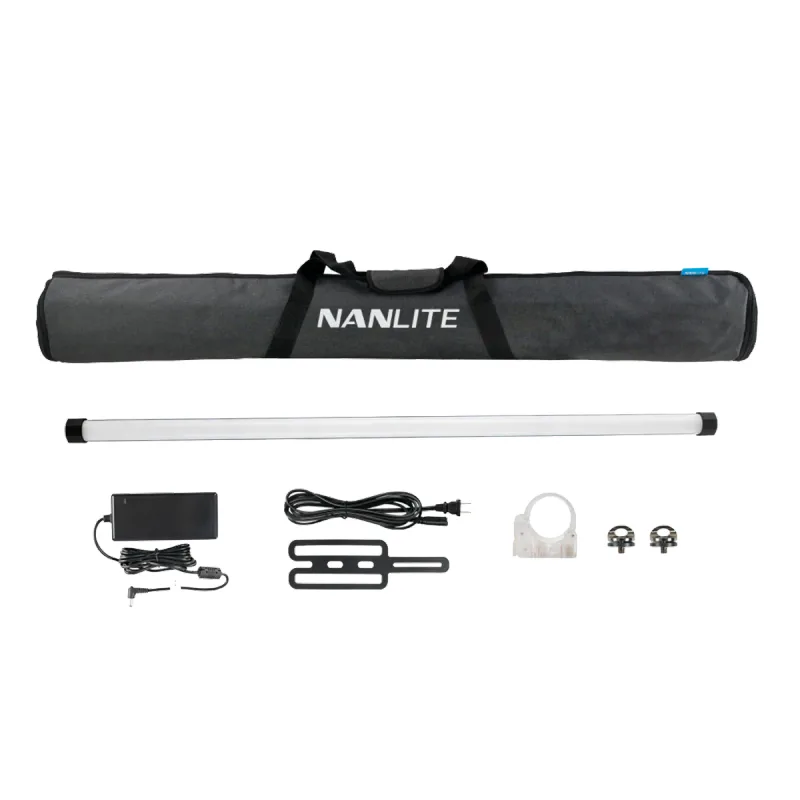 Nanlite PavoTube II 30X 4' RGBWW Pixel Tube Nanlite PavoTube II 30X 4' RGBWW Pixel TubeNanlite | 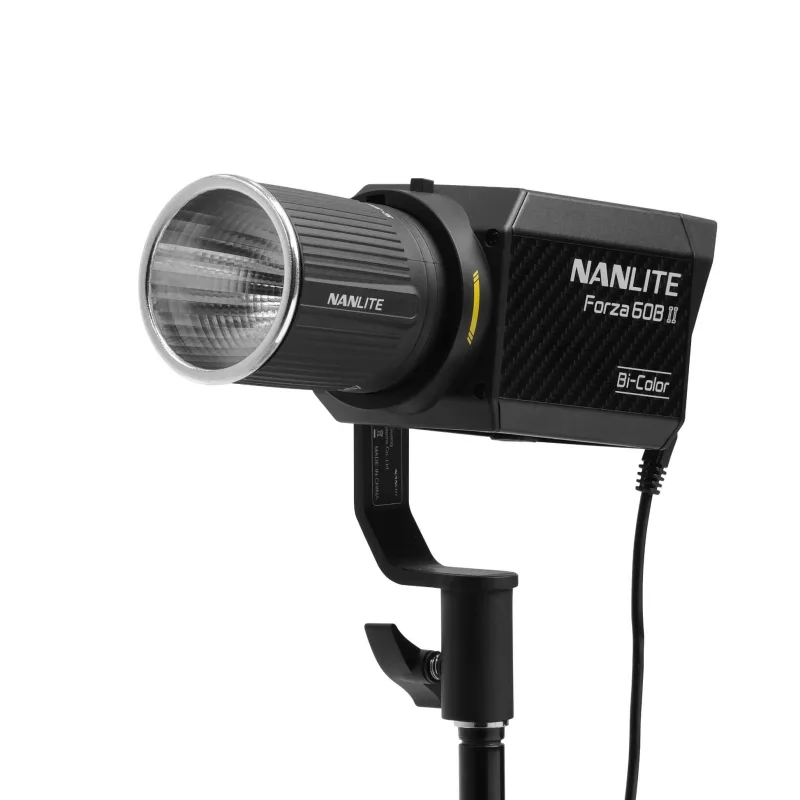 Nanlite Forza 60B II Bi-Color LED Spotlight Nanlite Forza 60B II Bi-Color LED SpotlightNanlite |
|---|---|---|
| Price (tracked / list) | $419 / $540 list | $319 |
| Overall scoreeffectively tied (within ±6pt band) | 76±6 | 73±3 |
| Tier | pro | enthusiast |
| mount type | Built In | bowens |
| color mode | rgb | bicolor |
| power (W) | 36 | 72 |
| app control | yes | yes |
| Where to buy | Check price | Check price |
Some links may be affiliate links — same price for you; our comparisons are never influenced by commissions.