Intel Core i7-14700K vs Core Ultra 9 285K: which to buy
These two Intel chips tie at 80 in our research, but they are not interchangeable: the Core i7-14700K is the strongest drop-in for an existing LGA1700 board, while the Core Ultra 9 285K is a new-platform flagship that trades raw clock-for-clock gaming pace for more cores, a modern socket, and far lower power. The single question that decides this is whether you already own an LGA1700 motherboard or are building fresh.
Pick the Core i7-14700K if you have a Z690/Z790 (LGA1700) board and a working DDR4 or DDR5 kit, and you want the biggest performance jump you can get without buying a new platform. It is a 20-core (8 performance + 12 efficiency) / 28-thread Raptor Lake part that boosts to 5.6 GHz, and because it runs on LGA1700 it can ride on either DDR4 or DDR5 — a genuinely rare escape hatch that lets you reuse memory the 285K would force you to replace. By the spec sheet it typically undercuts the 285K on price, and for a same-day upgrade where the rest of the rig stays put, that combination is hard to argue with.
Pick the Core Ultra 9 285K if you are starting from scratch and want the platform with a future. It is Intel's Arrow Lake flagship: 24 cores (8 performance + 16 efficiency) / 24 threads at up to 5.7 GHz on the newer LGA1851 socket, and it is rated at 125 W TDP. The headline practical differences are core count and efficiency — those four extra efficiency cores give it more parallel throughput for rendering, compiling, and heavy multitasking, and Arrow Lake's design draws dramatically less power under sustained all-core load than Raptor Lake does. Note that the 285K dropped hard after launch (our research has it around 39% below its original price), which narrows the cost gap that historically favored the 14700K.
The trap to avoid: buying either of these for a gaming-first build. Both are pure raw-compute chips with no 3D V-Cache, and in our scoring an AMD X3D part like the Ryzen 7 9800X3D leads both for frame rates while sipping power. If your build is 90% games, you are spending flagship money on the wrong strength. There is a second, Intel-specific trap on the 14700K: it is a Raptor Lake chip, and that generation carries a documented voltage-degradation history. It is fixable — you must update the motherboard BIOS to the 0x12B-or-later microcode before first heavy use — but it is a real step you cannot skip, and one the brand-new 285K simply doesn't have.
Workflow-wise, think about your actual load. If you render, transcode, compile, or run many threads at once and want that work to keep getting platform support, the 285K's extra cores and modern socket are the safer long-term home. If you live mostly in lightly-threaded apps, a few productivity bursts, and gaming with a discrete GPU, the 14700K already has more than enough threads and the clock speed to feel snappy — paying the platform tax for the 285K buys you little there. Also weigh cooling and power: the 14700K's 253 W turbo is genuinely hot and demands a strong air tower or a 240 mm-plus AIO, whereas the more efficient 285K is easier to keep quiet, though both are too thirsty for a tiny SFF build.
Bottom line: if you already own an LGA1700 board, the 14700K is the smart-money move — it is the most powerful drop-in still sold, it can keep your DDR4, and it usually costs less, as long as you apply the microcode fix. If you are building new and your work is multi-threaded — or you just want the newer, cooler-running, longer-lived platform — the Core Ultra 9 285K is the one to buy, especially now that its price has fallen toward the 14700K's. And if frames-per-second is the real goal, skip both and look at an X3D chip instead.
Spec comparison (generated live)
| Spec | 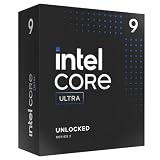 Intel Core Ultra 9 285K Intel Core Ultra 9 285KIntel |  Intel Core i7-14700K Intel Core i7-14700KIntel |
|---|---|---|
| Price (tracked / list) | $290 / $475 list | $378 / $409 list |
| Overall scoreeffectively tied (within ±6pt band) | 79±6 | 80±3 |
| Tier | no compromise | pro |
| socket | LGA1851 | LGA1700 |
| cores | 24 | 20 |
| threads | 24 | 28 |
| boost (GHz) | 5.7 | 5.6 |
| TDP (W) | 125 | 125 |
| integrated graphics | yes | yes |
| x3d cache | no | no |
| Where to buy | Check price | Check price |
Some links may be affiliate links — same price for you; our comparisons are never influenced by commissions.