RX 9070 vs RTX 5070: the same-price GPU showdown
These two land at the same price and the same tier, which is exactly why they get cross-shopped to death. Both are PCIe 5.0 enthusiast cards aimed at 1440p-maxed and entry-4K gaming, both ask for a 650 W power supply, and our scoring puts them dead even at 71. So the decision isn't "which is faster" in the abstract — it's which kind of fast you care about, and how much VRAM headroom you want for the next few years.
The core trade-off is raster-and-memory versus ray-tracing-and-features. The AMD Radeon RX 9070 (16 GB) carries 16 GB of GDDR6 and edges ahead in traditional rasterized rendering at 1440p — reviewer consensus puts the plain (non-XT) card a few percent in front natively, so call it a slim raster lead rather than a blowout. The NVIDIA GeForce RTX 5070 answers with 12 GB of faster GDDR7, the edge in ray tracing that widens in heavy path-traced titles, the broader DLSS 4 ecosystem, and CUDA for anyone who does creative or AI work on the side. Once ray-traced games are folded into the average the two are effectively even — which is why they tie on score. One is the better pure rasterizer with more buffer; the other is the better feature platform with a thinner memory margin.
Pick the AMD Radeon RX 9070 (16 GB) if you mostly play at 1440p maxed (or dip into entry-4K) and want the card to age gracefully. The extra 4 GB is the headline: modern titles already brush 10 to 11 GB at 1440p with upscaling, so 16 GB is real insurance against texture-heavy future releases while 12 GB sits closer to the edge. On its rated spec it also draws less power — 220 W TBP versus 250 W — which leans toward a cooler, quieter build for the same recommended PSU. If frames-per-dollar in ordinary rasterized rendering is your priority, this is the value pick.
Pick the NVIDIA GeForce RTX 5070 if ray tracing and the software stack matter more to you than a few percent of raster. NVIDIA pulls ahead with RT cranked — especially in path-traced titles — DLSS 4 (including frame generation) ships in more games than FSR 4, and if you touch CUDA workloads like rendering, local AI, or content tools, that ecosystem is simply the safer bet. It's also the shorter card at 242 mm versus 312 mm, a real 70 mm difference that matters in compact or mini-ITX cases where the 9070 may not physically fit.
The trap to avoid: buying the RTX 5070 for "future-proofing" while overlooking that its 12 GB is the spec most likely to bottleneck first. If you're a raster-first 1440p gamer who keeps cards for years, the bigger frame buffer on the 9070 is the more durable kind of headroom — paying the NVIDIA premium in features doesn't help if you run out of VRAM in a few seasons. Conversely, don't buy the 9070 if half your reason for upgrading is path-traced lighting; that's the one arena where it clearly trails.
One caveat that applies to both: at this tier the listed MSRP is the optimistic number, and street pricing on either card can drift above it depending on stock. Check the live cards before you commit and factor real availability into the call — the cheaper-to-actually-buy card on the day you shop is a legitimate tiebreaker when the two are this evenly matched.
Bottom line: the AMD Radeon RX 9070 (16 GB) is the smart default for the raster-first 1440p gamer who wants more VRAM, lower rated power, and the better frames-per-dollar in ordinary rendering. The NVIDIA GeForce RTX 5070 is for the buyer who leans into ray tracing, wants the deeper DLSS 4 and CUDA ecosystem, or needs the shorter card for a small build. If you chase lighting and features, go RTX 5070; if you chase raster value and longevity, the RX 9070 wins.
Spec comparison (generated live)
| Spec | 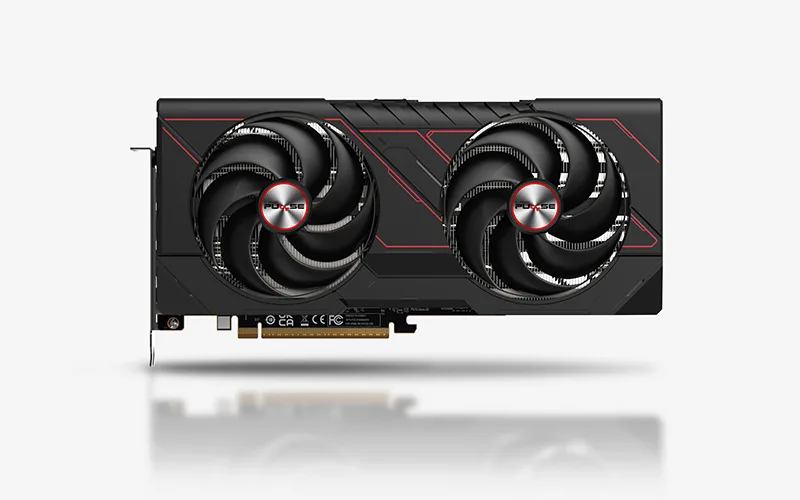 AMD Radeon RX 9070 (16 GB) AMD Radeon RX 9070 (16 GB)AMD | 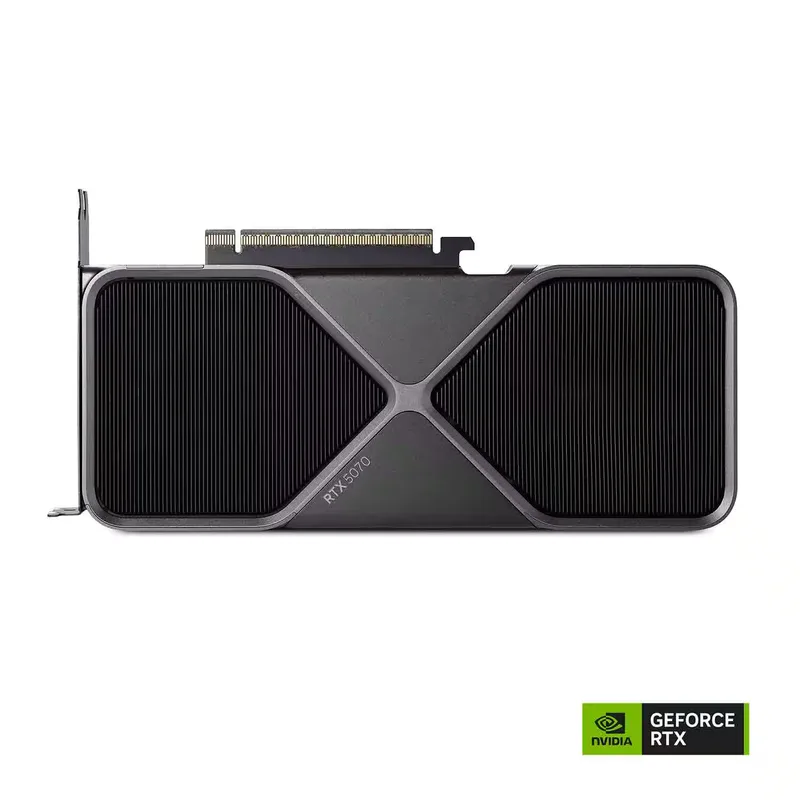 NVIDIA GeForce RTX 5070 NVIDIA GeForce RTX 5070NVIDIA |
|---|---|---|
| Price (tracked / list) | $599 / $549 list | $630 / $549 list |
| Overall scoreeffectively tied (within ±3pt band) | 71±3 | 71±3 |
| Tier | enthusiast | enthusiast |
| VRAM (GB) | 16 | 12 |
| power draw (W) | 220 | 250 |
| PCIE gen | 5 | 5 |
| recommended PSU (W) | 650 | 650 |
| length (mm) | 312 | 242 |
| Where to buy | Check price | Check price |
Some links may be affiliate links — same price for you; our comparisons are never influenced by commissions.