AMD RX 7700 XT vs RX 9070 XT: which to buy
These two Radeon cards are not really the same class of GPU, and that gap is the whole decision. The RX 9070 XT is AMD's current RDNA 4 step-up card with 16 GB of VRAM and a $599 MSRP, sitting a full tier above the RDNA 3 RX 7700 XT, which launched in 2023 at $449 with 12 GB and is now one of the few cards actually selling below its list price. So the question is really: do you want the most resolution and longevity per dollar today, or the cheapest entry into solid 1440p gaming right now?
Pick the RX 9070 XT if you want the card to stay relevant for years and you game at 1440p high-refresh or 4K. On paper it is the newer architecture, carries 16 GB of VRAM versus the 7700 XT's 12 GB, and runs on a PCIe 5 interface — and crucially it brings AMD's current-generation feature set, including the FSR 4 upscaling and frame-generation work that the RDNA 3 cards don't get in the same form. That 16 GB buffer is the part that ages best: modern titles at high settings, ray tracing, and texture-heavy games increasingly push past 12 GB, and once you exceed the frame buffer, performance falls off a cliff no amount of raw horsepower fixes. If this is a multi-year card in a high-end build, the 9070 XT is the one that won't feel starved in 2028.
Pick the RX 7700 XT if your target is solid 1440p at the lowest sane price and you'd rather bank the savings. Its real selling point in mid-2026 is unusual: while most GPUs carry inflated street pricing, the 7700 XT has been listing below its $449 MSRP rather than above it, which makes it a genuine value anomaly rather than just an old card. For esports, competitive shooters, and mainstream AAA at 1440p with sensible settings, 12 GB and RDNA 3 are still plenty. If you're building to a fixed budget and the GPU is the line item you most want to shrink, this is the disciplined pick — and the money you save is real money you can move into a better CPU, more storage, or a higher-refresh monitor.
The trap to avoid: don't buy the 7700 XT because it's AMD's value play and then turn around and run it at 4K or crank ray tracing and max textures — that's exactly where 12 GB and the older architecture run out of room, and you'll feel like the card underdelivers when really you bought a tier too low for the workload. The flip side trap is overpaying for the 9070 XT's 16 GB if you only ever play at 1080p or esports titles, where neither the extra VRAM nor the newer feature set will ever stretch its legs. Match the card to the resolution you actually run, not the one on the box.
A note on power and fit, because these cards differ there too. The 9070 XT draws more — 304 W typical board power against the 7700 XT's 245 W — and AMD recommends a 750 W PSU for it versus 700 W for the 7700 XT, so factor the supply into your budget if you're upgrading an older build. The 9070 XT is also a physically longer reference design (around 320 mm) than the 7700 XT's roughly 267 mm card, which matters in compact cases — measure your clearance before you commit. Neither is a small-form-factor darling, but the 7700 XT is the easier fit.
One thing both cards share: this is a Radeon-vs-Radeon decision, so if your work depends on CUDA — most local AI tooling, certain 3D renderers, and a lot of ML libraries — neither is your card, and you should be looking at NVIDIA instead. For pure gaming, both are strong; for mixed creative/compute workflows that lean on CUDA, look elsewhere entirely.
Bottom line: if this is a high-end or future-proofed build and you game above 1080p, the RX 9070 XT is the right buy — the 16 GB buffer and current-gen feature set are worth the step up and will age far better. If you're cost-conscious, gaming mainly at 1440p, and want to exploit the fact that the 7700 XT is one of the rare cards selling under MSRP right now, it's a smart, money-saving choice that punches well at its price. Buy the tier that matches your resolution, not the brand-new badge.
Spec comparison (generated live)
| Spec | 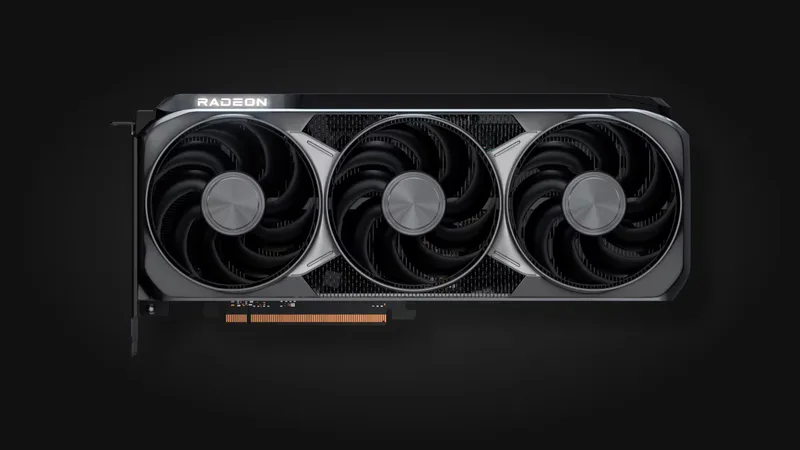 AMD Radeon RX 9070 XT AMD Radeon RX 9070 XTAMD | 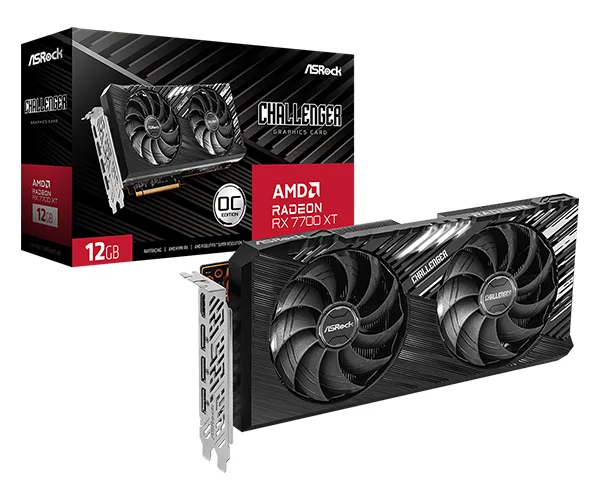 AMD Radeon RX 7700 XT AMD Radeon RX 7700 XTAMD |
|---|---|---|
| Price (tracked / list) | $700 / $599 list | $449 |
| Overall score | 78±3 | 73±3 |
| Tier | pro | enthusiast |
| VRAM (GB) | 16 | 12 |
| power draw (W) | 304 | 245 |
| PCIE gen | 5 | 4 |
| length (mm) | 320 | 267 |
| recommended PSU (W) | 750 | 700 |
| Where to buy | Check price | Check price |
Some links may be affiliate links — same price for you; our comparisons are never influenced by commissions.