GIK 244 Bass Trap vs 242 FlexRange Panel: which to buy
These are not really rivals so much as two jobs in the same GIK toolkit, and the decision comes down to one question: are you fighting reflections off your walls, or boom and uneven bass in your corners? On paper, the 242 FlexRange Acoustic Panel is a thinner broadband absorber tuned to kill first reflections, while the 244 Bass Trap is a thicker, 5.25-inch panel built to reach down into the low end where the 242 runs out of depth. Buy the wrong one and you will spend enthusiast-tier money treating a problem you don't have.
Pick the 242 FlexRange Acoustic Panel if your symptoms are flutter echo, smeared stereo imaging, or harsh, splashy high-mids — the classic small-room reflection problems. By the spec sheet it carries an NRC of 1.05, which is the headline reason it outclasses cut foam: where a 2-inch foam wedge rolls off hard below the upper mids, the 242 keeps absorbing broadband and does it far more evenly. It's also the more affordable per-panel piece and comes in sizes from 2x2 up to 2x4 ft, so it is the cheaper, more flexible piece to buy several of. If you're laying out your first set of panels — side-wall mirror points, the wall behind the monitors, the ceiling cloud above your head — this is the workhorse you want, and you want it in multiples.
Pick the 244 Bass Trap if your room booms, notes disappear at certain spots on the keyboard, or the low end feels different every time you move your head. That is modal/corner behavior, and the 242 simply isn't deep enough to do much about it. The 244's extra thickness (5.25 inches versus the 242's slimmer broadband build) is the whole point: depth is what buys you low-frequency absorption, and the 244 is purpose-built for the corners and wall-floor/wall-ceiling junctions where bass energy piles up. It sits a tier above the 242 per panel, which is exactly what you'd expect for more material doing harder physics.
The trap to avoid: papering your walls with cheap foam (or even with 242s) and expecting your bass problems to clean up. Thin absorbers do almost nothing below a couple hundred hertz, so a room "treated" entirely with first-reflection panels can still sound boomy and inconsistent in the low end — and you'll wrongly conclude treatment doesn't work. The flip side is just as wasteful: buying a stack of 244 traps to handle high-frequency reflections is overkill, since a 242 does that job for less money and takes up less depth on the wall. Match the tool to the frequency.
If you're in a small bedroom studio and starting from zero, the honest answer is that this isn't an either/or — GIK designed the 242 and 244 to work together, and most rooms need both. A sane sequence is to put 244 traps in the front corners first to tame the worst low-end peaks, then add 242 panels at the side-wall and ceiling reflection points to tighten imaging and clarity. If your budget truly only stretches to one type right now, choose by what you actually hear: if mixes translate badly because the bass is a guessing game, start with the 244; if the room is "ringy" and harsh but the low end is roughly okay, start with the 242s because they're cheaper and you'll get more coverage per dollar. Renters should note the 244 is the trickier mount of the two — GIK offers freestanding options, but a corner-mounted trap is the usual install, so factor that in before you buy.
Bottom line: the 242 FlexRange Panel is the broadband first-reflection specialist and the smarter first purchase for clarity and imaging at the lower per-panel price; the 244 Bass Trap is the corner low-end specialist you graduate to (or buy alongside it) once boom and modal unevenness become the limiting factor. They aren't competitors — they're the two halves of a properly treated room. If forced to pick the single most impactful piece for a typical untreated small room, it's the 244 in the corners, because nothing else in your kit can touch the low end. Check the live price table below for current pricing before you commit, since GIK has folded both into its FlexRange families and pricing varies by size and fabric.
Spec comparison (generated live)
| Spec | 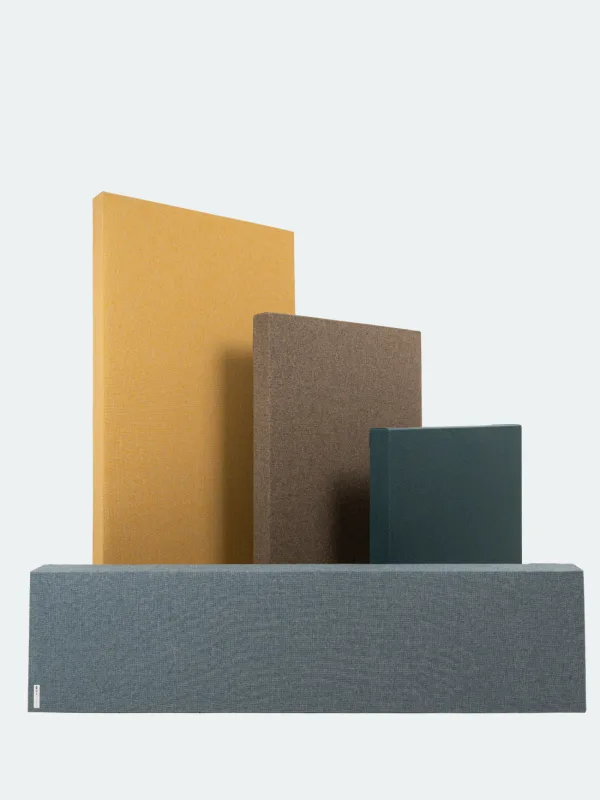 GIK Acoustics 242 FlexRange Acoustic Panel GIK Acoustics 242 FlexRange Acoustic PanelGIK Acoustics |  GIK Acoustics 244 Bass Trap GIK Acoustics 244 Bass TrapGIK Acoustics |
|---|---|---|
| Price (tracked / list) | $84 list | $139 list |
| Overall scoreeffectively tied (within ±3pt band) | 70±3 | 71±3 |
| Tier | enthusiast | enthusiast |
| treatment type | Absorption Panel | Bass Trap |
| coverage | fabric-wrapped broadband absorber; NRC 1.05; sizes 2x2 to 2x4 ft | 5.25" thick panel, FlexRange |
| Where to buy | Check price | Check price |
Some links may be affiliate links — same price for you; our comparisons are never influenced by commissions.