Akai MPK Mini Plus vs Akai MPK249: which to buy
These are two Akai controllers built for opposite ends of the same brand. The MPK Mini Plus is a self-contained 37-mini-key idea machine you can throw in a backpack; the MPK249 is a full-size 49-key semi-weighted performance board that wants a permanent spot on your desk. The decision isn't really "which is better" — it's whether you want portability and standalone tricks or playability and hands-on control.
Pick the MPK Mini Plus if your priority is footprint, price, and getting ideas down fast. You get 37 mini keys, 8 RGB MPC pads, a built-in sequencer, and — the part that genuinely sets it apart — CV/Gate that lets it drive hardware synths and Eurorack modular without a computer in the chain. It connects over a single USB Type-B cable, with no separate power adapter to carry, so it's the controller you actually bring to the couch, to a friend's place, or on a plane. At its enthusiast-tier price, it's the obvious first MIDI controller for a bedroom or laptop producer who values compactness over feel.
Pick the MPK249 if you intend to play the keyboard, not just trigger notes. The 249 has 49 full-size, semi-weighted keys — the difference between sketching a melody and actually performing two-handed chords, basslines, and piano parts is night and day versus mini keys. You also step up from 8 pads to 16 full-size MPC pads, and you gain the hands-on control panel the Mini Plus simply doesn't have: assignable Q-Link knobs, faders, and switches for mixing, riding automation, and mapping plugin parameters. It sits a clear tier above — roughly double the Mini Plus — and it's the right call for anyone building a desk-anchored studio rig where the controller is the daily driver.
The trap to avoid: buying on key count or price alone and ignoring key feel and intent. Two real mismatches happen constantly here. First, a buyer who wants to learn piano or play expressively grabs the Mini Plus to save money — and then fights the cramped mini keys forever; that's a person who should have stretched to the 249's semi-weighted full-size keys. Second, the reverse: a producer who mostly finger-drums and sequences hardware overspends on the 249 for keys they rarely touch, when the Mini Plus's CV/Gate and onboard sequencer were the actual feature they needed. Match the board to how you make music, not to the spec sheet's bigger number.
A few practical notes that cut across both. Neither is the natural pick if your laptop is USB-C-only and you hate dongles — both use USB Type-B, so you'll be carrying an adapter cable either way. Both are Ableton Live-compatible (not deep-mapped "native" the way some Novation gear is), so if seamless out-of-the-box Live integration is your top requirement, weigh that separately. And the 249's larger footprint and desk-bound nature mean it's not the controller for a minimalist, grab-and-go setup — that's squarely Mini Plus territory.
Bottom line: if you're a portable, hardware-curious, budget-minded producer who sketches more than performs, the MPK Mini Plus is the smarter buy, and its CV/Gate output is a bonus few controllers at its size offer. If you want real keys under your fingers, twice the pads, and the knobs-and-faders control surface of a permanent studio centerpiece, the MPK249 earns its higher tier — just don't pay for it unless you'll genuinely use the playability.
Spec comparison (generated live)
| Spec | 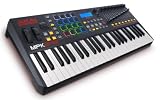 Akai MPK249 Akai MPK249Akai Professional | 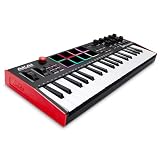 Akai MPK Mini Plus Akai MPK Mini PlusAkai Professional |
|---|---|---|
| Price (tracked / list) | $379 list | $169 list |
| Overall scoreeffectively tied (within ±6pt band) | 74±6 | 72±3 |
| Tier | pro | enthusiast |
| keys | 49 | 37 |
| pads | 16 | 8 |
| connection | USB B | USB B |
| Where to buy | Check price | Check price |
Some links may be affiliate links — same price for you; our comparisons are never influenced by commissions.